General Bill of Sale Form
A General Bill of Sale Form is a document that records the sale of personal property. It is a flexible document that ensures easy transfer of ownership of various items. This protects both the buyer and the seller.
Download a General Bill of Sale Form
If you’re selling personal property nowadays, you want to document your sale. You may be selling anything from a used treadmill to an antique clock or a guitar. In any case, you’ll find a template that fits.
These downloadable forms are professional, simple, and ready-to-use. You just have to print them or fill them out online. With our templates, you can complete your sale and confirm the transfer in writing.
General Bill of Sale Types
A general bill of sale can be used in different situations. These can include:
- Vehicle Sales
- Real Estate Transactions
- Personal Property Transfers
- Business Sales
About This Document
This document records the transfer of ownership of personal property. It protects the interests of the buyer and seller by putting the terms of the sale in writing. When you use this compliant template, you have proof if there’s ever a dispute about your sold item or the agreement.
What Is a General Bill of Sale?
A General Bill of Sale is a written document recognizing a sale or transaction involving personal property. It does not typically need a special form. It is a formal receipt, which details the exact item being sold, the agreed-upon price, and the date.
Such a document can be considered a pillar of proper individual legal management. It outlines the moment when the ownership changes and provides transparency. This minimizes any misunderstanding in the future.
Consider this document as a general-purpose document that records the sales of movable goods. This may include anything from furniture to jewelry and even a certain type of equipment. It is flexible enough for straightforward transactions that deserve a legal record.
The essence of the agreement is that it is simple and clear. Both parties can have a verifiable record of the transaction. This is useful if disputes come up or for tax and insurance purposes.
A well-drafted form contains various basic elements that make this document clear. It also makes it valid and gives proper coverage to both parties. All the components are important to the transaction:
- Identification of Parties: Names and addresses of buyer and seller.
- Detailed Description of Property: Clear details of the item you're selling.
- Purchase Price and Payment Details: Sale amount and how the payment is made.
- Date of Sale: The date ownership changes.
- Condition of Property: Optional note on the state of the item.
- Signatures of Parties: Signatures of the buyer and seller to confirm the agreement.
- Witness Signatures: Optional. Gives extra verification for high-value items.
- Notarization: Optional. Adds legal backing if desired.
How to Use a General Bill of Sale
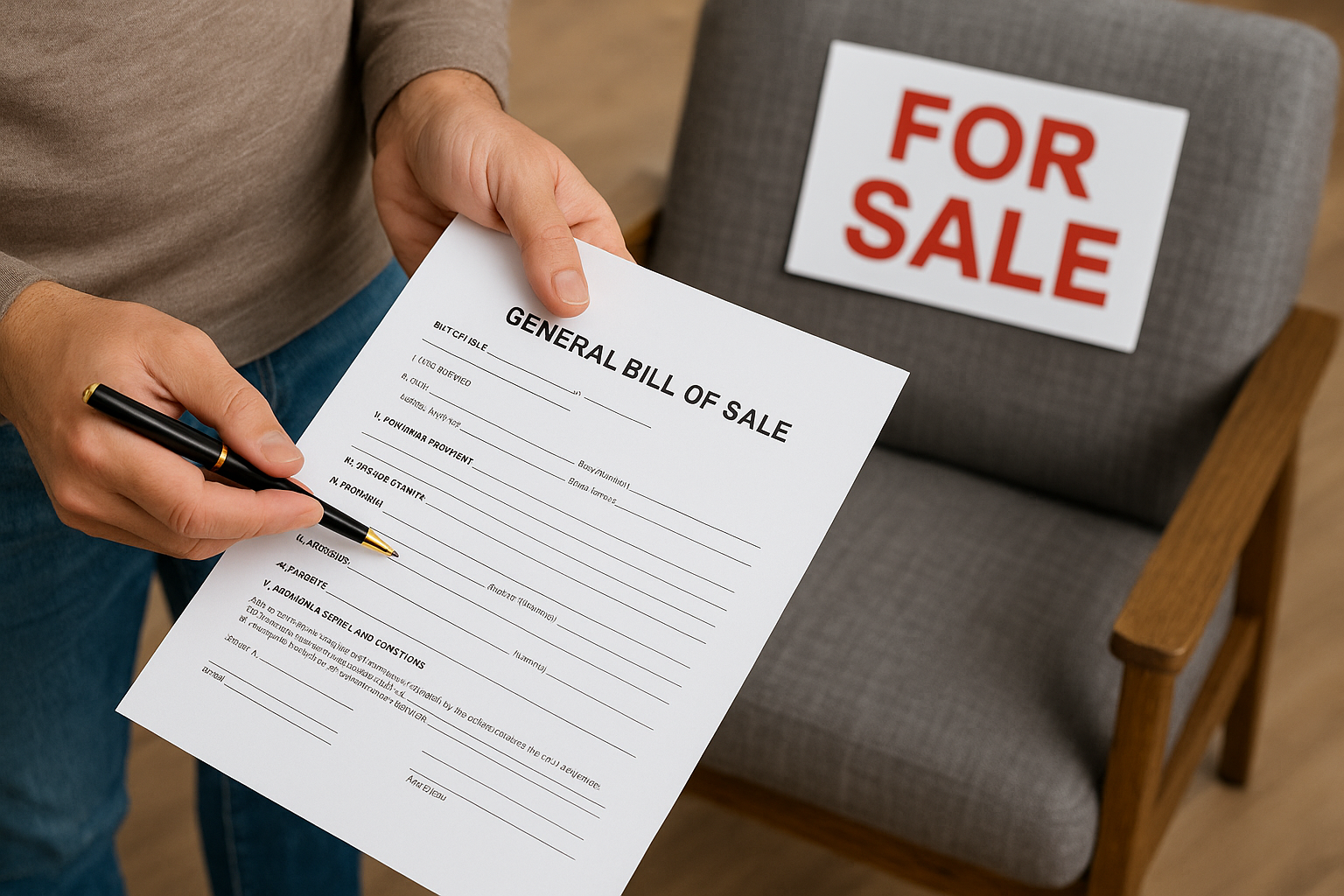
A General Bill of Sale is flexible enough to be used in everyday personal property sales.
- Selling Furniture and Household Items
This is one of the most common applications. When you're selling via online marketplaces, garage sales, or private listings, it is a clear record. It ensures the buyer admits they got the item and the seller is no longer liable. - Transferring Antiques, Art, and Collectibles
It is also used for items with significant value, sentimental or monetary. For example, antique furniture, paintings, rare books, or collectibles. This document adds an extra layer of authenticity and provenance.
It creates an obvious chain of ownership. This can be important for appraisals, insurance, and future resale value.
- Selling Sports Equipment and Recreational Gear
You can be selling items like a used bicycle, a set of golf clubs, camping supplies, or gym equipment. A General Bill of Sale can document the transfer. This is especially practical for items that will still be valuable.
It's also useful for those who might require proof of purchase to claim a warranty. Even if sold "as is," the original purchase may have a warranty.
- Documenting Sales of Machinery or Tools
This document is also well-suited for selling machinery, power tools, or specialized equipment.
Independent contractors, hobbyists, or small workshops can use it. It ensures a clear transfer of the ownership of such valuable assets.
- Private Sales of Animals/Pets
Some pet sales may be done with more specialized agreements. However, a General Bill of Sale can be used as a simpler document to change ownership of a pet or livestock. It can include basic details about the animal and the terms of sale, making it clear that ownership has changed hands. - Selling Miscellaneous Personal Property
Some items do not fit into the categories of a vehicle, boat, or firearm. These tend to have very regulated forms. A General Bill of Sale Form is the go-to document here.
It gives a standard method of reporting the sale of practically any tangible personal item. This gives clarity and legal protection when selling something.
Why Do You Need a General Bill of Sale?
The weight of using a General Bill of Sale Form is more than just for a sale. It is a safety measure to protect both parties' interests and prevent future issues. Certain transactions of personal property may seem casual, especially between acquaintances.
However, the lack of formal documentation can lead to major problems in the future.
For the seller, this document is undeniable proof that the property has been sold. This removes any future liability on the item from them. For example, possible maintenance charges, damages, or even theft after the sale.
It is a kind of shield because it confirms that they are no longer responsible for what the item is like or its use. It is also a record for taxes, especially when the asset sold is a big one.
For the buyer, this is also an important document. It is their main proof of ownership of the item. In the absence of a proper document, it may be hard to prove that they actually bought a certain item.
This can be an issue if the ownership is challenged by other parties. For example, insurance firms, the state, and even the seller themself (resale). It gives the legal status to demand rights on the property, register it when needed, and sell it later.
However, it is not usually required for ordinary goods such as automobiles. The clarity aids the building of trust and makes the deal rock solid. This is because of the transparency and mutual understanding.
Other Questions
What Are the Benefits of Using a Printable General Bill of Sale?
Using a printable from a site like LegalDocs.com makes the process faster and easier. The template saves your time, so you only need to fill it in and print it. It gives legal cover because of the standard terms that are already in it.
This includes the terms of the agreement, sale price, and the details relating to the item. It also adds a sense of formality to the transaction, which prevents confusion. This introduces an element of professionalism even for a plain old private sale.

What Is a General Bill of Sale vs. A Specialized Bill of Sale?
A General Bill of Sale works for most personal property that does not need special registration. For example, electronics, equipment, or furniture. It is versatile, simple, and can be used in normal transactions.
Specialized bills of sale are for items that are under regulation or need a title transfer or disclosures. These may be vehicles, boats, firearms, or animals. You need to use the right version for compliance and protection.
- Vehicle Bill of Sale: This form is quite specific because selling a vehicle usually requires disclosures. For example, odometer reading and VIN verification. State DMVs typically standardize these forms. They contain special fields that are not present in a general form.
- As-Is Bill of Sale: This expressly includes an as-is clause, which disclaims all warranties. A general bill of sale might contain such a statement. However, a specific one will certainly bring this important legal protection to the seller.
- Boat Bill of Sale: Boats tend to be different when it comes to registration. They have hull identification numbers (HIN) and titling procedures in each state.
- Firearm Bill of Sale: The sale of firearms is subject to federal and state laws at a high level. They may demand background checks or other particular transfer requirements. These cannot be covered by a common Bill of Sale.
The lesson to be learned here is that the general Bill of Sales is great for common goods. However, it's a good idea to check whether your item has any special requirements. This lets you know if you need a specialized form.
With the proper document, you can have full legal protection and compliance.
How Do You Ensure the Legal Enforceability of Your General Bill of Sale?
There are some best practices to make your form complete and legally binding. These steps solidify the transaction.
- Accurate Information: Cross-check names, addresses, item details, and even prices. Mistakes can cause disputes or weaken the form.
- Mutual Understanding: Both parties should fully read and understand the terms. They should have agreed to everything before signing.
- Proper Execution: Both sides have to sign. Notarization or a witness isn’t required, but it helps prevent forgery claims.
- Retain Copies: Each person should keep a signed original copy. Save a digital backup for tax or proof.
- Follow State Laws: Some states may require a written contract for goods over a set amount. Meet those limits to ensure it's enforceable.
State Resources Links
|
S/N |
State |
Resource |
|
1. |
Alabama |
|
|
2. |
Alaska |
|
|
3. |
Arizona |
|
|
4. |
Arkansas |
|
|
5. |
California |
|
|
6. |
Colorado |
|
|
7. |
Connecticut |
|
|
8. |
Delaware |
|
|
9. |
Florida |
|
|
10. |
Georgia |
|
|
11. |
Hawaii |
|
|
12. |
Idaho |
|
|
13. |
Illinois |
|
|
14. |
Indiana |
|
|
15. |
Iowa |
|
|
16. |
Kansas |
|
|
17. |
Kentucky |
|
|
18. |
Louisiana |
|
|
19. |
Maine |
|
|
20. |
Maryland |
|
|
21. |
Massachusetts |
|
|
22. |
Michigan |
|
|
23. |
Minnesota |
|
|
24. |
Mississippi |
|
|
25. |
Missouri |
|
|
26. |
Montana |
|
|
27. |
Nebraska |
|
|
28. |
Nevada |
|
|
29. |
New Hampshire |
|
|
30. |
New Jersey |
|
|
31. |
New Mexico |
|
|
32. |
New York |
|
|
33. |
North Carolina |
|
|
34. |
North Dakota |
|
|
35. |
Ohio |
|
|
36. |
Oklahoma |
|
|
37. |
Oregon |
|
|
38. |
Pennsylvania |
|
|
39. |
Rhode Island |
|
|
40. |
South Carolina |
|
|
41. |
South Dakota |
|
|
42. |
Tennessee |
|
|
43. |
Texas |
|
|
44. |
Utah |
|
|
45. |
Vermont |
|
|
46. |
Virginia |
|
|
47. |
Washington |
|
|
48. |
West Virginia |
|
|
49. |
Wisconsin |
|
|
50. |
Wyoming |
How To Complete a General Bill of Sale in 5 Easy Steps
Making a General Bill of Sale should be easy. More so, when one uses a credible form on a site like LegalDocs.com. Here's how to complete it:
- Gather All Relevant Information About the Sale
Collect all the information that relates to the transaction before you start. Get the details of both parties, as well as their addresses and contact information. More importantly, have a full description of the product being sold prepared.
This includes any special features that can identify it. Next, confirm the purchase price that was agreed upon and the precise date of the sale. Be diligent here to avoid correcting the document in the future.
- Choose a Comprehensive General Bill of Sale Form
Choose a quality template from a reliable source. You can find an appropriate template on LegalDocs.com. It will take you through all the necessary sections so that the document meets the standards.
This can especially benefit those unfamiliar with legal terms or common contract formats. A good template is your guideline and ensures you don't leave anything important out.
- Input All Transaction Details Accurately
Fill in all the information very carefully into the right fields on the form. Make sure you recheck all the entries. Clarity and accuracy matter a lot.
For example, an incorrect date or a digit in a serial number can lead to more issues. Describe briefly and clearly to avoid ambiguity about the item or terms of sale. This helps make sure that the details of the transaction are reflected in the document.
- Review the Document Thoroughly
After filling in all the information, review the document thoroughly. Read every clause and make sure it corresponds with what you and the other party agree on. Read and ensure that there are no typos or grammatical mistakes.
This review step is important to ensure your document is accurate and set to be signed. It is the last chance to catch any issues before it becomes an official document.
- Print and Execute the Bill of Sale
After reviewing, print and save several copies of your bill of sale. Both the buyer and seller sign and date each copy. Then, each party should be given an original signed copy to keep.
The signatures may be witnessed by impartial third parties. In case of a very valuable transaction, it can even be notarized, although it's not often a strict legal requirement. The right execution makes the document binding.
You can use this document whenever you are selling or purchasing personal property. That's when it doesn't have a specific title or specialized disclosure requirement. It is valuable when dealing with something of great value and for tax reasons, as well as to have a clean legal trail.
A General Bill of Sale that is filled and signed is valid and legally binding. It shows that the buyer and the seller have agreed to the terms of the sale, and ownership has transferred. If there are any issues between the parties, then this document can be brought up as evidence.
Generally, notarization is not necessary to make this form valid. It is normally adequate to have the signatures of the buyer and the seller. Nonetheless, in cases where the objects of the transaction are of high value, it can serve as an added measure of assurance.
The buyer normally has the responsibility for the item after the form is signed and ownership is transferred. Once it has been sold, the buyer is responsible for the damage to the item. This is unless the agreement states otherwise.
A printable general bill of sale is a type of form that has already been designed. All that you need to do is fill it in, print it, and then use it right away. It gives a sequential and legally acceptable format, which lets you enter all the required details.
The general form can be used to sell any item. This usually means that the item is in reasonable working condition unless stated otherwise. An "As Is Bill of Sale" carries a provision that plainly states that the item is being sold as it is, with no warranties.
It is not recommended to use it when selling a vehicle or boat in a private sale. Motor vehicles and boats come with state and federal regulations, titling necessities, and custom forms. The best solution is to use a dedicated form that meets the requirements for safety.
A bill of sale for personal property is commonly used for selling personal items. For example, furniture sets, electronics, jewelry, used machinery or tools, and even pets or livestock. It's ideal for any tangible item where clear proof of purchase is helpful.
When describing the item, be as detailed as possible. Include the item's type, brand, model, color, size, material, and any unique identifiers. For electronics, include serial numbers.